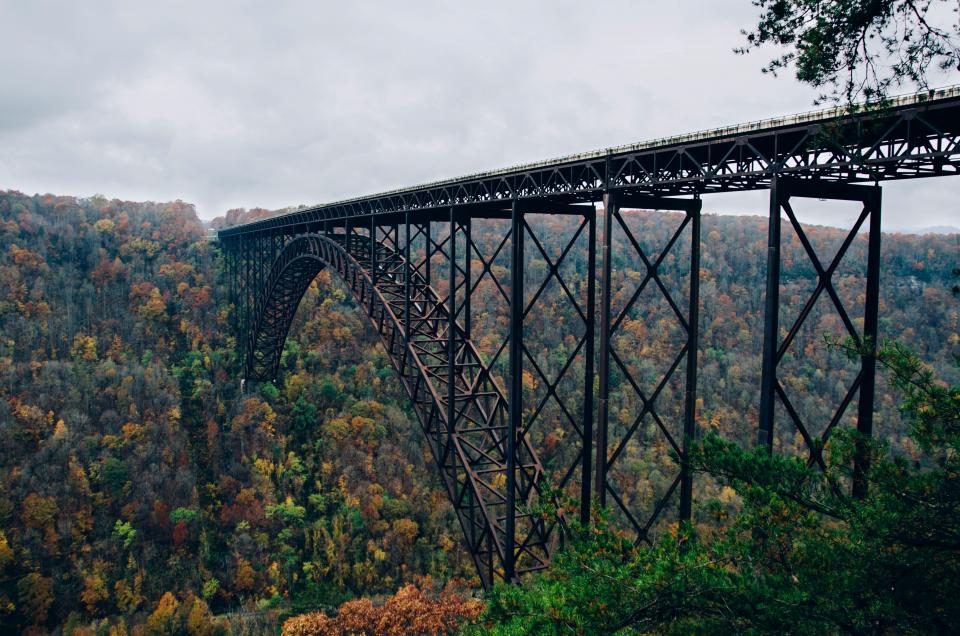
Why the Appalachian Autumn Is Unlike Anywhere Else
Fall color is a global phenomenon, but there are only a handful of places on earth where it reaches the intensity of the eastern American mountains: the Appalachians, parts of northeastern Asia, and a few pockets in Europe. The reason is diversity. A single hillside here can carry sugar maple, red maple, hickory, tulip poplar, sourwood, black gum, sassafras, red oak, white oak, birch, beech and dogwood, and every one of them turns a different color on a slightly different schedule. Instead of the uniform gold of a northern aspen stand, you get a mosaic that changes week by week.
Living in or visiting a cabin in these mountains means having a front-row seat to that process for six weeks or more. Understanding what is actually happening inside the leaves, and what governs the timing, turns the season from a pretty backdrop into something you can read and even predict.
What Is Actually Happening Inside the Leaf
Through the growing season a leaf is a chemical factory dominated by chlorophyll, the green pigment that captures sunlight and drives photosynthesis. Chlorophyll is unstable and has to be continuously rebuilt, which takes energy and warmth. It is also so abundant and so intensely green that it masks everything else in the leaf.
The pigments that were already there
Carotenoids — the yellows and oranges — are present in the leaf all summer, doing accessory work in light capture and protecting the photosynthetic machinery from damage. They are far more stable than chlorophyll. When shortening days trigger the tree to shut down chlorophyll production, the green fades away over a few weeks and simply uncovers the yellow that was there the whole time. This is why birch, hickory, tulip poplar, beech and aspen turn dependable gold nearly every year regardless of the weather. Their color is a subtraction, not an addition.
The pigments the tree makes on purpose
Reds and purples are different. Anthocyanins are manufactured fresh in the autumn, inside the leaf, from sugars trapped there as the tree closes off the connection to the twig. Because they have to be built, they depend on conditions: bright sunlight to drive sugar production, and cool nights to slow the export of those sugars out of the leaf. That combination is why red maple, sugar maple, sourwood, black gum, dogwood, sumac and scarlet oak can be spectacular one year and merely rusty the next.
Researchers still debate why a tree would spend energy on a pigment in an organ it is about to discard. The leading explanations are sunscreen — anthocyanins protect the leaf from light damage while the tree recovers nitrogen from it — and defense signaling against insects looking for a place to lay eggs. Both may well be true at once.
The browns
Tannins are waste compounds that remain when everything else has gone. Oaks, which are tannin-rich, often finish in bronze, russet and leather brown, and they hold those leaves long after the maples are bare. Beech does the same, keeping papery tan leaves on young trees through much of the winter.
What Triggers the Whole Process
The initiating signal is not temperature. It is night length. As darkness lengthens past a species-specific threshold, the tree begins forming an abscission layer — a corky barrier of cells at the base of each leaf stem that gradually chokes off the flow of water in and sugar out. Because day length is identical on the same date every year, the broad timing of fall color is remarkably consistent. The calendar sets the schedule; the weather only decides how good the show will be.
- Warm sunny days plus cool nights make the best reds. Sun drives sugar production, and nights in the low forties Fahrenheit trap those sugars in the leaf where anthocyanins get built. This is the classic recipe for a memorable year.
- A hard early freeze cuts the season short. A deep frost kills leaf tissue outright, turning it brown and dropping it before anthocyanins have a chance to develop.
- Severe summer drought pulls everything earlier and duller. Water-stressed trees shut down early and often drop leaves without much color at all.
- A warm, wet, cloudy autumn mutes the reds. Warm nights let sugars drain out of the leaves, and clouds cut the sunlight that would have made more of them. The yellows still show up; the fire does not.
- Wind and heavy rain end it abruptly. Once the abscission layer is well developed, a single strong storm can strip an entire ridge in a night.
Elevation Is the Real Calendar
The single most useful thing to know about Appalachian fall color is that it moves downhill. Temperature drops roughly three to five degrees Fahrenheit for every thousand feet of elevation gained, which shifts the growing season by days. The practical result is that color starts on the highest ridges in late September and finishes in the valleys in early November, giving you a six-week window rather than a single weekend.
A rough elevation timeline
- Above 5,000 feet: late September into early October. The spruce-fir zone and the high northern hardwood pockets. Yellow birch, mountain ash and pin cherry turn first, and the color runs to gold and orange more than red.
- 4,000 to 5,000 feet: the first two weeks of October. High cove hardwoods hit their stride. This is often the most reliable window for a high-elevation drive.
- 3,000 to 4,000 feet: roughly the second and third weeks of October. The classic mixed hardwood peak, with maples, hickories and sourwood all going at once.
- 2,000 to 3,000 feet: mid to late October. Where most cabins actually sit. Reds and oranges dominate the slopes.
- Below 2,000 feet: late October into the first week of November. Valleys, river corridors and the piedmont edge, finishing out with oaks, hickories and stubborn late poplars.
Latitude matters too. Northern Pennsylvania and the Catskills run one to two weeks ahead of the same elevation in Tennessee and north Georgia. And aspect changes things at the scale of a single hillside: a cool, moist, north-facing cove turns before the hot, dry, south-facing slope directly across the hollow from it.
Learning the Species by Their Color
Once you can name a color, you can name the tree from a quarter mile away. This is one of the quiet pleasures of a mountain autumn, and it takes only a season or two to pick up.
- Sourwood: the first flame. A small understory tree that turns deep scarlet remarkably early, often in the first half of September, well before anything around it. When you see one blazing in a green forest, autumn has started.
- Black gum: crimson and glossy. Another early turner, with intensely red, almost varnished leaves. Both sourwood and black gum are worth learning because they are your first calendar markers.
- Red maple: variable and everywhere. Anything from clear yellow through orange to deep red, sometimes all on the same tree. It is the most common and most inconsistent performer in the forest.
- Sugar maple: the classic. Glowing orange with red edges, and at its best the color most people picture when they imagine fall in the mountains.
- Tulip poplar: clean yellow, early drop. Tall, straight and abundant in the coves. It often goes yellow and drops before peak, which is why an early-October forest can look half-bare while still building toward its best week.
- Hickory: deep gold. Rich, warm and long-lasting, and one of the pigments that carries the mid-elevation forest through late October.
- Sassafras: the multicolored one. Yellow, orange, red and pink, frequently on a single branch. Easy to identify by the mitten-shaped leaves.
- Oaks: the closers. Russet, wine, bronze and brown, arriving last and hanging on longest. A late-season ridge is an oak ridge.
Planning a Cabin Stay Around the Color
The mistake most visitors make is booking one specific weekend a year in advance and then hoping. The mountains reward flexibility more than planning.
- Pick an elevation band, not a date. If your cabin sits at 3,200 feet, mid-October is a strong bet in almost every year. If you are locked into a date instead, drive to the elevation that matches it.
- Use the vertical range as insurance. Even in a poor week, a two-hour drive that climbs or descends two thousand feet will find you color. This is the single greatest advantage of an Appalachian trip over a flatland one.
- Watch the forecast for cold nights. A run of clear days with nights in the low forties two weeks before your trip is the best available predictor of a red year.
- Go early in the day. Morning light, calm air, mist in the hollows and no traffic. Ridge roads and overlooks are gridlocked by eleven on October weekends.
- Book well ahead but travel midweek. Peak-season cabin availability in the mountains disappears months in advance, and midweek stays cost less and see a fraction of the crowds.
Seeing It Well From Where You Are
You do not need a scenic byway to get the best of the season. Some of the finest looking is done from a porch with a cup of coffee.
Overcast days and light drizzle actually improve leaf photographs, because diffuse light saturates color and removes the harsh contrast that flattens a sunny hillside. A polarizing filter cuts the waxy glare off wet leaves and deepens the sky behind a ridge. Backlighting — standing so the sun comes through the leaf rather than onto it — makes maples and hickories glow like stained glass, which is why late afternoon on an east-facing slope is worth waiting for.
And when the display is at its best, get closer than the vista. A single sassafras branch, the pattern of a fallen sourwood leaf on wet stone, the pale undersides of red maples flipping in the wind ahead of a storm: these are the details that stay with you long after the panorama has blurred into every other panorama. Peak is a moving target, but the six weeks around it are almost never a disappointment for anyone willing to look at what is actually in front of them.