Music Here Is Not Decoration
Within an easy drive of this cabin, on almost any weekend, a group of people is sitting in a circle playing tunes they learned from someone who learned them from someone else. Not a show. A jam, in a fire hall, a music store, a church basement, a barn. That continuity is what is worth understanding about music and craft here, and it is what a visitor misses if he gets no farther than the souvenir shelf.
Where the Songs Came From
The Ballads
The oldest layer of song here is the narrative ballad, carried out of England, Scotland and Ireland by settlers who came down these valleys in the eighteenth century. These are long story songs, often unaccompanied, often sung by women in the home, with plots about murder, betrayal, drowning and the return of the dead. Many are versions of ballads collected in Britain generations earlier, and the mountain versions often preserve verses already lost on the other side of the ocean.
When English folklorists came through the southern mountains around the First World War and wrote down what people sang, the amount of surviving old material astonished them. It also produced a stubborn myth: that these were isolated pockets of pure Elizabethan England. That is wrong, and the reason it is wrong matters.
The Banjo Is an African Instrument
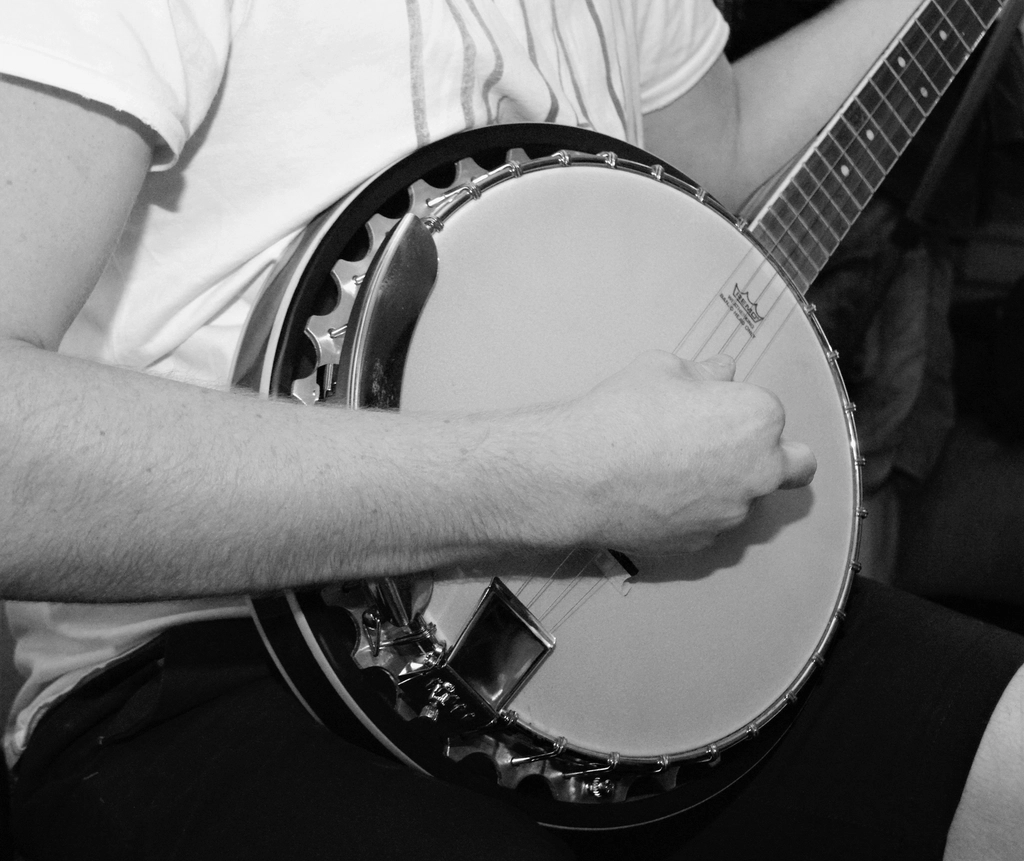
The banjo did not come from the British Isles. It descends from West African plucked lutes, instruments with a skin head over a gourd or wooden body, and it arrived in the Americas with enslaved Africans. The earliest banjos in this country were made and played by Black musicians, and it was known as an African American instrument long before anyone thought of it as a white southern one. It moved into the wider American repertoire in the nineteenth century, partly through blackface minstrel shows, and from there into the mountains.
Black musicians shaped this music continuously, not just at the beginning. Bill Monroe learned from the Black guitarist and fiddler Arnold Shultz. Lesley Riddle traveled with A. P. Carter collecting songs and taught the Carter Family guitar parts. Whole Black string band traditions ran alongside white ones and shared repertoire constantly. An account of mountain music that leaves this out is not simpler; it is false.
The String Band and What Came After
Old-Time and Bluegrass Are Not the Same Thing
The core of old-time string band music is fiddle and banjo playing a tune together, driving and repetitive, made for dancing. Guitar arrived later, once mail order and the railroads made instruments cheap, and settled in as a rhythm instrument. Old-time banjo is usually played clawhammer, a downward striking motion with the back of the fingernail.
Bluegrass is a different and much younger animal, put together in the 1940s around Bill Monroe’s band: high tenor harmony, a driving mandolin chop, and the three-finger banjo roll Earl Scruggs made standard. It is written for listening and for solos, where old-time is written for a dance floor. Calling the two the same thing in front of a local musician is a reliable way to get a patient correction.
The Dulcimer
The Appalachian dulcimer, the narrow fretted one played across the lap, is genuinely a regional invention. It appears to have grown out of the scheitholt, a German zither carried south by Pennsylvania German settlers down the Great Wagon Road. It is easy to learn, quiet, and built for accompanying a voice in a small room. It is not the hammered dulcimer, which is struck with small mallets and comes from a different lineage.
Handwork and the Craft Schools
The craft tradition here has two parts: what people made because they needed it, and the deliberate revival around the turn of the twentieth century, when settlement workers organized mountain makers into cooperatives and schools. Both are still alive, which is why this region has an unusual density of working studios.
Clay
The Catawba Valley alkaline-glazed stoneware tradition, with its low groundhog kilns and wood ash glazes, produced churns, jugs and the face jugs collectors chase. Potters in that lineage are still firing. Farther east, in the Piedmont rather than the mountains, the Seagrove area holds another dense pottery community, worth knowing so you can tell the two traditions apart.
Fiber
Coverlet weaving on four-harness looms, in overshot patterns with handed-down names, was a household art the craft revival turned into a cash trade. Natural dyes came off the same hillsides you are hiking: black walnut hulls for brown, bloodroot for orange, indigo and madder from the garden. All of it is still taught here.
Wood and Iron
The classic mountain chair is a ladderback with a woven hickory bark seat, made with green wood so the joints tighten as they dry. Add carving, cooperage, broom making with hand-tied handles, and blacksmithing, which has had a serious revival here. A good hand-forged knife or a local ladderback will outlast everyone reading this.
Cherokee Work Is Its Own Tradition
The Eastern Band of Cherokee Indians is not a footnote to mountain craft but an older, separate tradition with its own techniques and meanings. Rivercane doubleweave basketry, in which a single basket is woven with an inner and outer wall, is among the most technically demanding basketry anywhere. White oak and honeysuckle baskets, dyes from bloodroot and butternut, carving, pottery and beadwork all continue. A long-running artists’ cooperative on the Qualla Boundary, one of the oldest Native American arts cooperatives in the country, means the maker is Cherokee and gets paid. A very different transaction from the imported plastic on the highway.
How to Tell the Real Thing From the Gift Shop Version
The test is simple: can somebody tell you who made it and where. A juried guild gallery, a studio with a kiln out back, a co-op with the maker’s name on the tag, a school with students in the shop. Those pass. A wall of identical carved bears and factory dulcimers does not, and buying it quietly competes with the people who do the work.
Prices reflect this. Handmade means hours, and hours cost money. A real basket or a wood-fired jug costs what it costs; if the price looks like a highway souvenir, that is what it is.
Music You Can Actually Walk Into
The best music here is mostly free, and it is not on a tourist itinerary. Look for weekly open jams at music shops and community centers, fiddlers’ conventions and county festivals in warm weather, square dances with a live band and a caller, church singings, and folk schools with public concerts. Some folk festivals here go back the better part of a century. Regional public radio and the state music trail programs list current events; schedules change constantly, so check what is on rather than last year’s listing.
Ask locally too. Whoever is behind the counter at the hardware store usually knows who is playing Friday. This is not information that lives online.
If You Sit In
- Listen first, for a long time. Sit outside the circle for a set or two before you unpack anything. You are learning the group’s repertoire, keys and tempo, and whether it is an old-time circle or a bluegrass one, which changes how you play.
- Ask before joining. A quiet word to whoever anchors the circle is all it takes, and the answer is almost always yes. Walking up and starting to play is the one thing that annoys everybody.
- Play under, not over. If you do not know the tune, back off the volume or just chop rhythm. Nobody minds a beginner who is listening; everybody minds a loud one who is not.
- Tune away from the circle. Step off, get in tune, come back. An out-of-tune instrument in a jam is more disruptive than a wrong note.
- Do not ask for requests you cannot play. The circle is participatory. If you want a concert, buy a ticket, and buy the record while you are there.
- Buy directly from the musicians and makers. Cash at the merch table or the studio door is what keeps this alive, far more than admiration does.
Spend one evening of your week in a room where people are playing for each other rather than for you. It will tell you more about these mountains than any overlook.