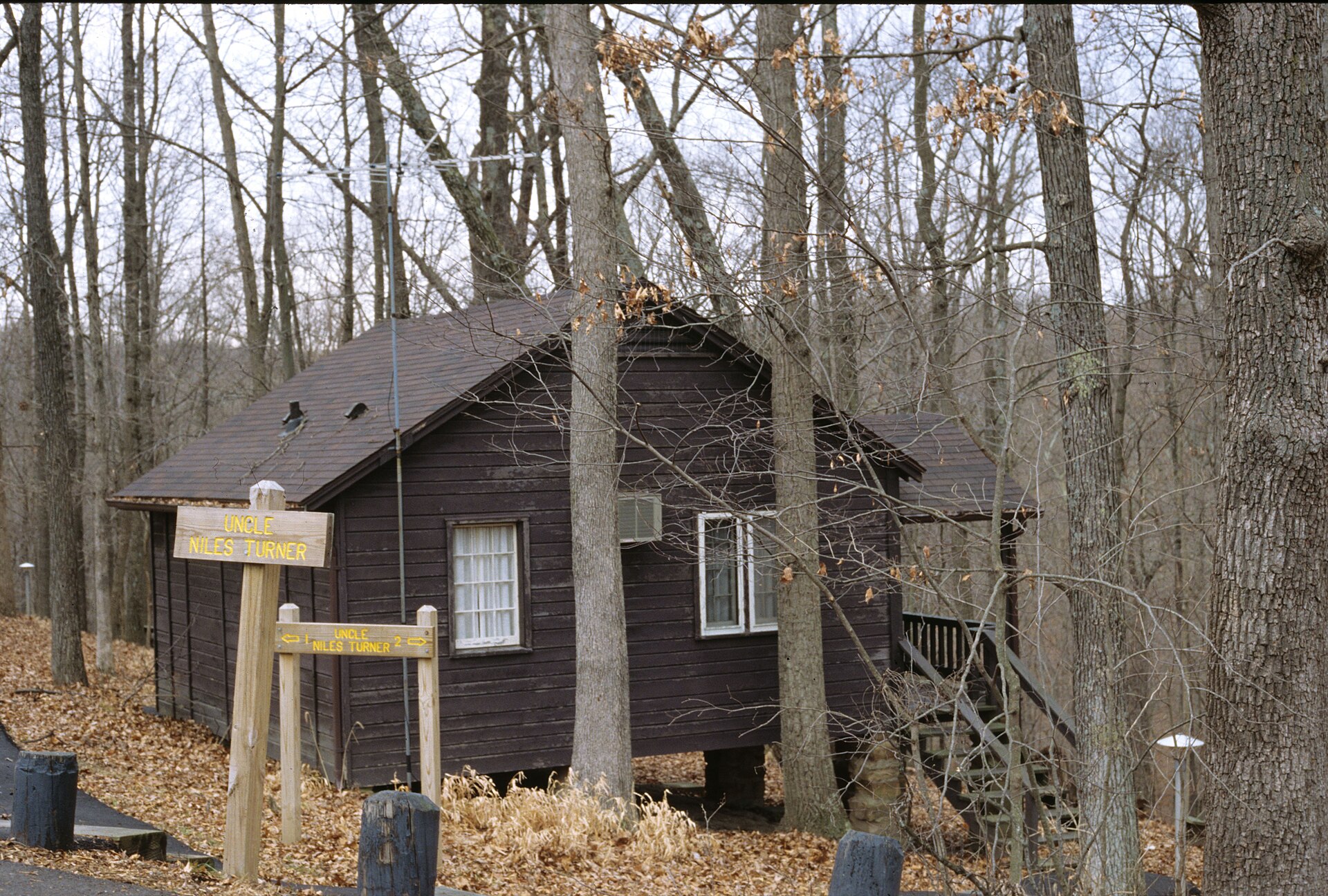
The best choice depends less on the cabin itself than on how close you want to be to the trails, the town, or the quiet of a gravel lane.
What kind of cabins can you find in Brown County?
Listings across the county cover a wide spread. At the small end, you will find a one-bedroom cabin with a hot tub and fire pit that sleeps three, and a canvas-tent site on a raised platform meant for two guests. In the middle sit two- and three-bedroom cabins for four to eight people, usually with a full kitchen and a fireplace or fire pit. At the large end, one four-bedroom lodge advertises beds for 12, along with a game room and a screened porch.
Some properties lean on history. One listing describes a relocated 1800s log lodge at the end of a quiet gravel lane, while another is a renovated log cabin on a wooded lot above a creek. Others are newer builds that put comfort first, with air conditioning, fast internet and several outdoor living spaces.
Before you compare photos, decide which of these three styles suits your trip:
- Compact and private: good for couples or a solo reset, with fewer rooms to heat, clean and keep track of.
- Mid-size family cabin: enough bedrooms for a small group, usually with a kitchen that handles real cooking.
- Large lodge: suits a reunion or a shared trip, but expect more coordination and more noise.
How close should you stay to Nashville and the state park?
Location shapes a Brown County stay more than anything else. Some cabins sit within a few hundred metres of downtown Nashville, which means shops and restaurants are a short walk away. Others are several kilometres out along gravel lanes, with more quiet and a longer drive for supplies. A few are close to the state park instead. One family-managed lodge is described as about 2.5 kilometres from the park’s West Entrance, and a two-bedroom cottage is listed roughly 160 metres from the park boundary.
Brown County State Park is the anchor of the area. It is the largest state park in Indiana, covering 15,776 acres, and draws about 1.2 million visitors a year. It has trails for hiking, biking and horseback riding, along with two lakes for fishing. If your plan is to spend most days on foot or on a bike, a cabin near a park entrance saves you a drive each morning.
If you would rather split your time between woods and town, a cabin on the edge of Nashville gives you both. If you want the feeling of being tucked away, look further out, and read the listing closely for the road description, since a gravel lane changes how you arrive and how you leave in wet or icy weather.
Why does this landscape feel the way it does?
The hills you will drive through carry a long story. Brown County was created in 1836, and early settlers cleared much of its hilly woodland to farm it. The soil was poor, and a mix of weak farming practices and erosion drained its nutrients, so many farmers eventually left. That history is part of why the forests here are second growth, and why the area later drew attention as a place worth protecting.
Richard Lieber, the first director of the Indiana Department of Conservation, visited in 1910 and was impressed enough to build a cabin near Nashville and suggest setting land aside for a state park. The park opened in 1929 and was dedicated in 1932 as a memorial to the Indiana humorist Frank McKinney “Kin” Hubbard. Much of its rustic infrastructure was built by the Civilian Conservation Corps in the 1930s.
Knowing this gives a walk through the woods a bit more depth. The stone, timber and shelters you pass were built by hand, and the trees around you grew back after the land was worked hard.
What should you check before you book?
Cabin listings read warmly, so it pays to slow down and check the practical details. Start with the sleeping count and the bathrooms, since a cabin that technically sleeps six can feel crowded with six adults. Then look at the kitchen, the heating and cooling, and whether internet access is mentioned if you plan to work or need to stay reachable.
Outdoor features deserve a closer look too. A fire pit and a hot tub are common, but each comes with its own rules and upkeep, so read what the host asks of guests. If you plan to cook outside, the guide on building a fire pit and cooking outdoors safely covers the basics.
- Access: note whether the cabin sits on a paved road or a gravel lane, and plan your arrival in daylight.
- Distance to supplies: a cabin outside town may mean a longer trip for groceries, so stock up on the way in.
- Group fit: match the cabin size to the people who are actually coming.
- Season: the park is known for autumn colour and spring-flowering trees, so those seasons tend to be busier.
Reading reviews for cleanliness, location accuracy and how well the property matches its photos will tell you more than the description alone.
Frequently asked questions
Can you stay in a cabin inside the state park itself?
Yes. Besides the park’s lodge, cabins can be rented inside the park and campsites are available. This is a different option from the privately listed cabins around Nashville, so compare both if you want to be right on the trails.
What time of year is best for a Brown County cabin stay?
The area is known for its autumn colours and for trees that flower in spring, so both seasons are popular. Quieter months can suit you better if you prefer fewer people on the trails, though you should plan for the weather and for any gravel access.
Are the cabins suitable for large groups?
Some are. One lodge in the Smithville-Sanders area is listed as sleeping up to 12 guests, while many others sleep between two and eight. Match the sleeping count to your group and confirm bathroom numbers before booking.
Related reading
- Winter Access: Snow, Ice and Getting Up the Drive
- Preparing for a Stay Off the Grid: Embrace the Wilderness with Confidence
Sources
- Brown County, IN Cabins at the Best Price (cozycozy.com, accessed 2026-11-23)
- Brown County State Park — Wikipédia (en.wikipedia.org, accessed 2026-11-23)
Photo: Cabin, State Road 46, c1995 (Nashville, Ind.), by Indiana Landmarks, CC BY 4.0 (Wikimedia Commons)
