Cabins in Michigan fall into three broad groups: rustic cabins in state parks and national forests, modern cabins with heat and power, and privately listed rentals. The right one depends on how much comfort you want and how much you are willing to carry in. This guide explains what each type usually offers so you can book with realistic expectations.
What kinds of cabins can you book in Michigan?
The first thing to understand is that the word cabin covers very different buildings. A rustic state park cabin and a privately rented chalet share a roof and four walls, but little else. Sorting them into groups makes the choice far easier.
The Michigan Department of Natural Resources rents both rustic and modern cabins in its state parks. Rustic ones tend to be simple: beds, a table and a wood stove. Modern ones add electricity and heat, and some include a small refrigerator, which makes them feel closer to a compact efficiency unit than a shelter.
Federal land adds another layer. The Huron-Manistee and Hiawatha National Forests have rustic cabins that are plainer still. Some have no running water, and you may need to bring your own bedding.
Then there are private options. Campground cabins near towns such as Traverse City and Mackinaw City often come with full bathrooms and linens. Privately listed vacation rentals, found across the state, range from a one-bedroom retreat near Harbor Springs to a three-bedroom chalet near Glen Arbor.
How rustic is rustic?
Plan for less than you think. A rustic cabin usually means bunk beds, a table and a heat source, and little beyond that. You bring your own bedding, cookware, lantern and food. There is typically no refrigerator, no running water inside and no private bathroom.
That last point matters most in practice. Most state park cabins lack a private bathroom, so you walk to a shared restroom or a vault toilet, sometimes in cold and dark conditions. It is worth deciding in advance whether that suits you.
Heat usually comes from a wood stove, which means you need to know how to build and tend a fire safely. If you are new to this, the wood stove basics guide elsewhere on this site covers the fundamentals. Another common oversight is the kitchen: rustic cabins do not have one, so a camp stove is how you boil water and cook.
- Bring bedding, cookware, a lantern and all your food.
- Pack a camp stove, since there is no kitchen.
- Expect a walk to a shared restroom at night.
- Learn to run a wood stove before you arrive.
Which cabin suits which traveler?
A first-time cabin guest is usually happiest in a modern cabin with heat and electricity, because those remove the two biggest worries: staying warm and keeping devices charged. A state park with flush toilets nearby is a gentle starting point.
More experienced guests often prefer the solitude of a national forest or remote state park cabin. Porcupine Mountains Wilderness State Park is known for the largest collection of true rustic cabins, and some are a hike or ski away from the trailhead. Craig Lake State Park is remote and primitive, and in winter you must ski or snowshoe in.
Families with young children tend to do better near services and water. Ludington State Park offers several cabin types close to Lake Michigan beaches and the Big Sable River. Hoeft State Park near Rogers City has cabins near a sandy Lake Huron beach with shallow water. Tahquamenon Falls State Park puts you near the Upper Falls, and it is busy in summer but calmer in late September.
If you want a more comfortable private rental, listings range widely. One A-frame on Fine Lake offers a deck with lake views, while a modern chalet near Glen Arbor sleeps a larger group and includes a gas fireplace, fire pit and hot tub. Another in Keweenaw County is set up as a base for biking, with a wood-fired sauna on site. Because rental prices change with season and demand, check the current rate and the added cleaning and service fees before you commit.
How and when should you book?
Popular cabins fill early, so timing is the main practical skill. State park cabins are booked through the Michigan DNR reservation system, and reservations open six months ahead for most parks. Summer and fall color weekends go first, so reserve on the day the window opens if you want a prime park.
Winter is its own case. The most sought-after remote cabins can book out months ahead even for cold-season weekends, so do not assume winter means empty. Most state park visits also need a Michigan Recreation Passport for vehicle entry.
Seasonal timing shapes the experience as much as the cabin does. Shoulder seasons are often cheaper and quieter, and a cabin can feel far more comfortable than a tent when nights turn cold. If you are heading north in winter, read the notes on winter access and getting up the drive, since a remote cabin may involve more effort than the booking page suggests.
One more habit helps: confirm current rates and rules directly with the park or host before you pay. Fees, minimum stays and check-in methods vary by property and can change from one year to the next.
Frequently asked questions
Do Michigan state park cabins have private bathrooms?
Most do not. You usually walk to a shared restroom or a vault toilet, which can mean a cold trip after dark. If a private bathroom matters to you, look at private campground cabins or vacation rentals instead.
What should you bring to a rustic cabin?
Bring your own bedding, cookware, a lantern and food, plus a camp stove since there is no kitchen. Many rustic cabins also have no refrigerator or running water inside. Check the listing for what is included before you pack.
How far ahead should you book a Michigan cabin?
State park reservations generally open six months in advance, and popular parks fill quickly on summer and fall weekends. Remote winter cabins can also book out early. Reserve as soon as your window opens.
Which cabin is best for a first visit?
A modern cabin with heat and electricity at a state park with flush toilets nearby is a comfortable start. Parks such as Ludington and Tahquamenon Falls offer more services than the remote options. Save the hike-in cabins for when you know what you enjoy.
Related reading
- Mountain Roads: Grades, Gravel and Driving Up Here
- Best Time to Visit the Smoky Mountains: A Season-by-Season Guide
Sources
- The 7 Best Cabin Getaways in Michigan – Be Blissful Travel – (beblissfultravel.com, accessed 2026-11-24)
- Michigan Cabin Camping: 16 Best Cabins & Booking Guide (camptrailtravel.com, accessed 2026-11-24)
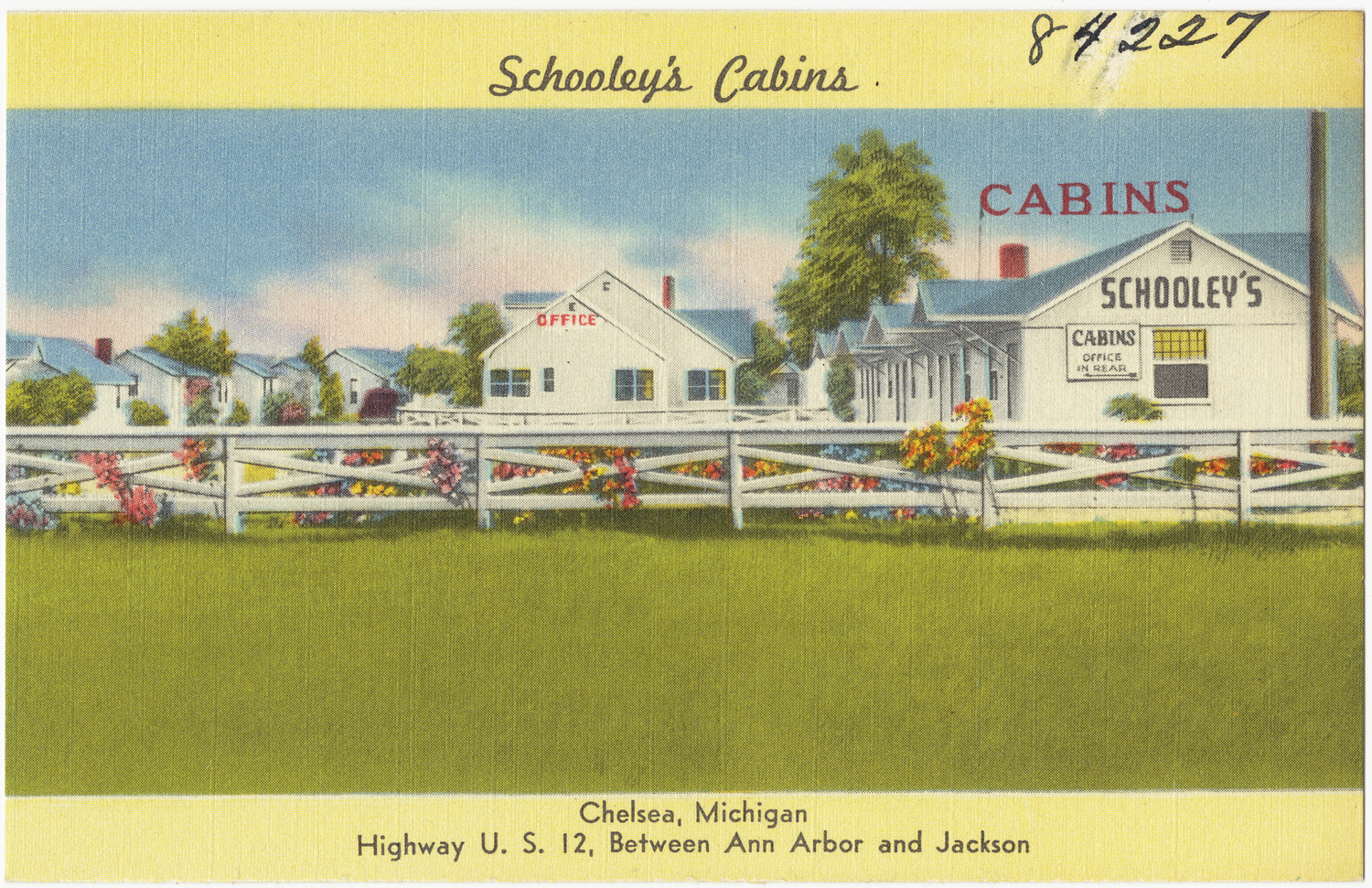
Photo: Schooley’s Cabins, Chelsea, Michigan, Highway U. S. 12, between Ann Arbor and Jackson, by Boston Public Library, CC BY 2.0 (Wikimedia, via Openverse)