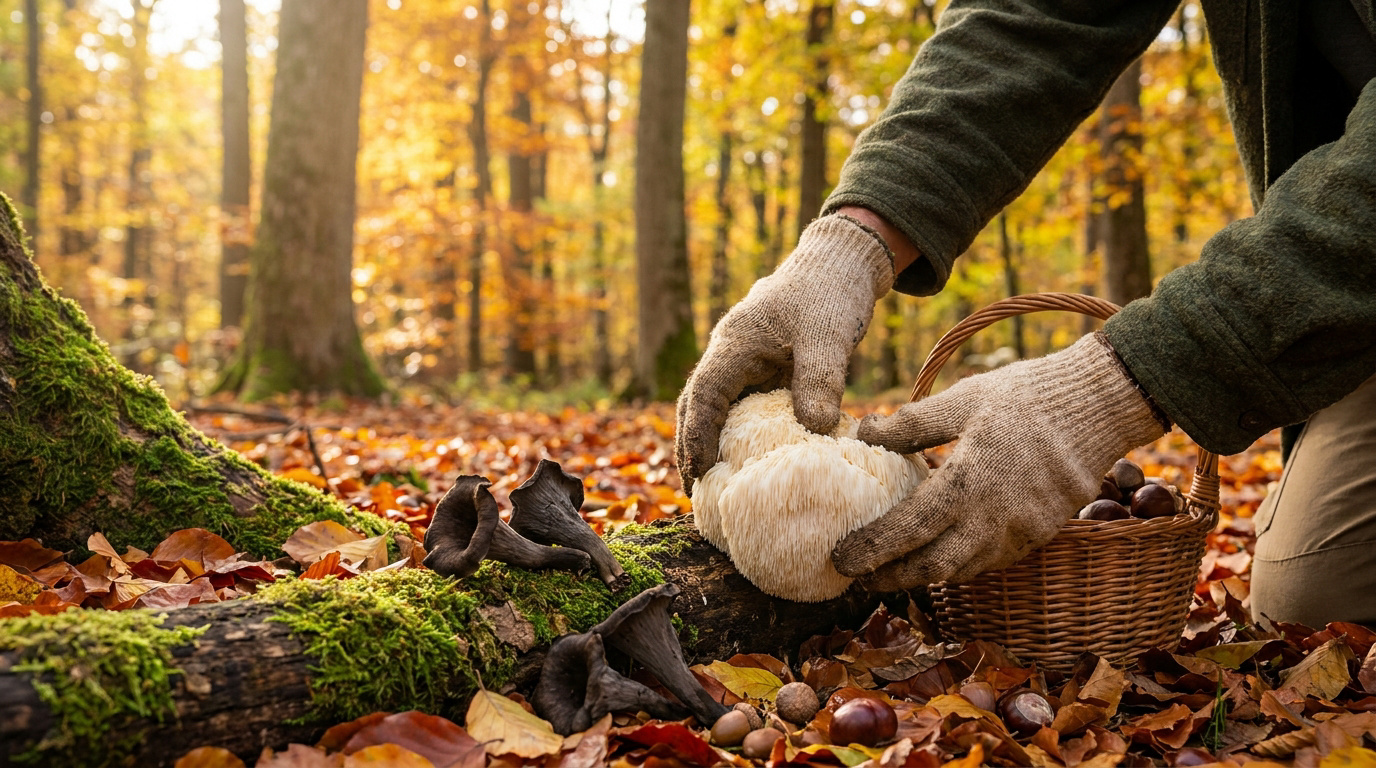
Key takeaway: Autumn foraging in the Southern Appalachians centers on targeting acidic soils and host trees like Oaks to find Chicken of the Woods, Lion’s Mane, and Black Trumpets. This strategy maximizes harvest success while ensuring safety through rigorous identification. By using mesh bags and leaving half the patch, foragers protect the mycelium and ensure these wild delicacies return annually.
A mature pawpaw tree can yield up to 25 kilograms of fruit in a single season, yet these native treasures remain largely absent from commercial shelves. Many foragers struggle to distinguish edible species from toxic lookalikes or miss the fleeting harvest windows of the Southern Appalachian forests.
This guide helps you master the identification of autumn mushrooms and nuts to ensure a safe, bountiful harvest. We will break down the essential field techniques and ecological markers needed for a successful foraging trip.
- Identifying Top Autumn Foraging Southern Appalachians Fungi
- 3 Safety Protocols for Avoiding Toxic Lookalikes
- How to Locate Appalachian Nuts and Native Fruits?
- Field Gear and Harvesting Regulations
Identifying Top Autumn Foraging Southern Appalachians Fungi
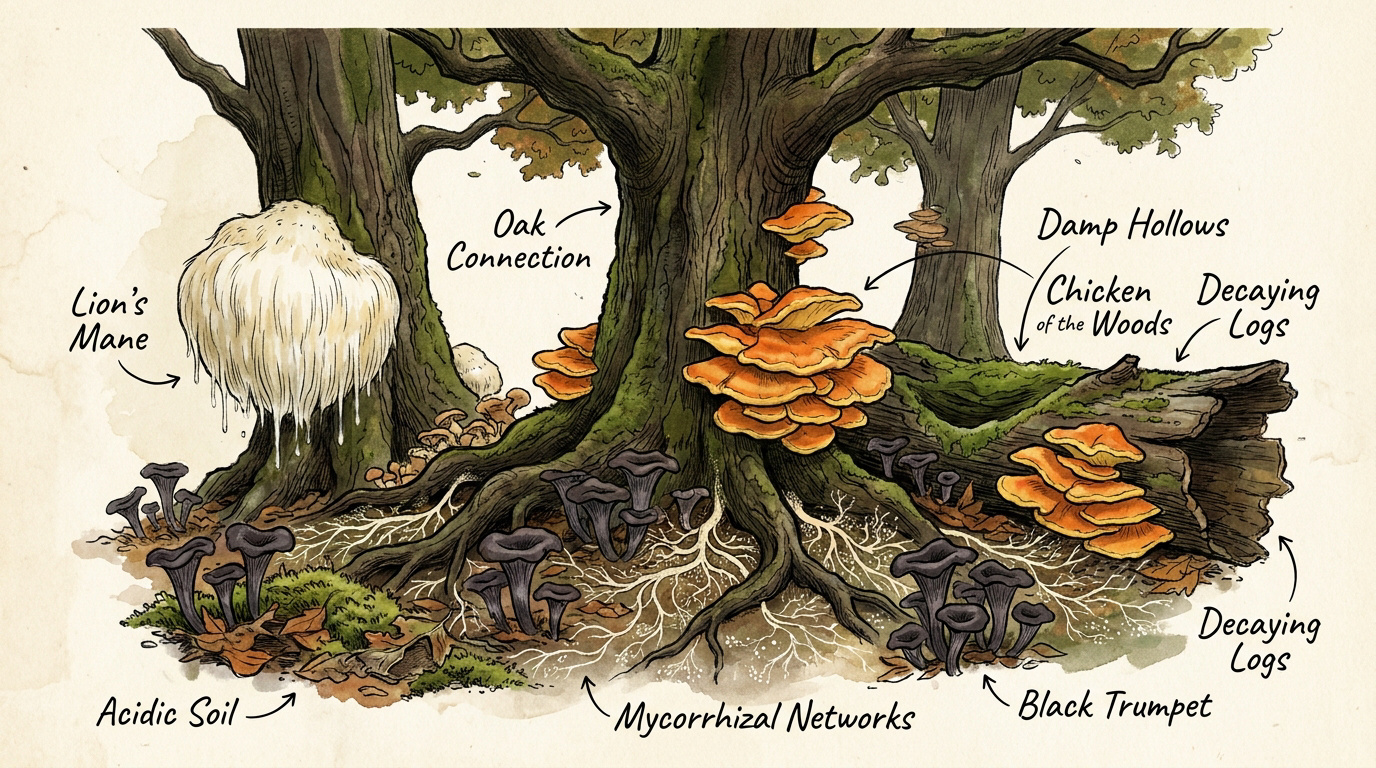
Southern Appalachian autumn foraging centers on Chicken of the Woods, Lion’s Mane, and Black Trumpets found near Oaks. Success requires identifying acidic soil and mycorrhizal host trees, specifically within moist drainage hollows and decaying hardwood logs.
Finding these treasures starts with understanding the hidden life of the forest floor.
The Oak Connection and Mycorrhizal Networks
Oak species maintain a deep symbiosis with local fungi. Nutrients exchange constantly through vast underground mycelial networks. This partnership sustains the entire Southern Appalachian forest floor.
Specific acidic soil conditions trigger growth. Low pH levels are necessary. These environmental factors spark successful autumn fruiting cycles.
Expert foragers prioritize Red Oaks and White Oaks. These specific host trees are vital. Locating them narrows the search for high-value edible specimens.
Spotting Lion’s Mane and Chicken of the Woods
Identify the icicle-like teeth of Hericium erinaceus. These white cascading spines grow on hardwood logs. Look for them in late September. They prefer dead or dying wood over healthy bark.
Watch for the bright orange shelf-like growth of Laetiporus sulphureus. This fungus appears in massive clusters. You will find them on decaying stumps.
Check for soft texture. Ensure the moist flesh yields. Avoid specimens feeling corky or dry.
Hunting the Elusive Black Trumpet in Damp Hollows
The funnel-shaped morphology of Craterellus fallax is distinct. These dark fungi blend with the forest floor. They are notoriously difficult to spot initially.
Seek out mossy habitats and natural drainage areas. These damp spots provide essential moisture. Focus on shaded northern slopes for the best results.
Autumn leaf litter provides a camouflaging effect. Move slowly. Careful steps prevent crushing these hidden gems.
3 Safety Protocols for Avoiding Toxic Lookalikes
Finding mushrooms is only half the battle, as safety protocols are the only way to ensure your harvest doesn’t end in disaster.
Distinguishing Turkey Tail from False Impostors
Compare the porous underside of Trametes versicolor with the smooth surface of Stereum ostrea. True Turkey Tail must have visible tiny pores. False versions lack this feature entirely. Use a magnifying glass for verification.
Look for distinct color zoning and a fuzzy texture. Medicinal specimens have a velvety top. These markers are definitive indicators for the species.
Perform a spore print on dark paper. This method provides scientific certainty before you consider any consumption.
Never skip this verification tool. It is the gold standard for safe foraging.
High-Risk Errors with Amanitas and Jack O’Lanterns
Contrast the bioluminescent Omphalotus illudens with edible chanterelles. Jack O’Lanterns have true gills that do not fork. Chanterelles feature false ridges instead.
Identify the volva and ring structures on the stem. These are classic signs of deadly Amanita varieties. Many toxic species hide their base in the soil. Always dig up the entire mushroom for inspection.
Consult local mycological experts or identification apps. Digital tools help but expert verification remains the safest path.
When in doubt, throw it out. No meal is worth a toxic reaction.
How to Locate Appalachian Nuts and Native Fruits?
While fungi dominate the forest floor, the canopy and understory offer a different bounty of wild nuts and fruits.
Harvesting Black Walnuts and Hickory Nuts
Identify the thick green husks of Juglans nigra. These fruits fall in late autumn. Be careful with the staining properties of the hulls. They will turn your hands dark brown quickly.
Learn to differentiate Shagbark hickory from Pignut hickory. Shagbark trees have peeling bark that hangs in long strips. This makes them easy to spot.
Start the curing process by removing the outer husks. Dry the nuts in a cool, ventilated area.
Proper curing makes wild nuts palatable. It also prevents mold growth during storage.
Finding Ripe Pawpaws in the River Bottoms
Locate Asimina triloba trees in alluvial soils. These trees thrive near river banks and shaded streams. Look for large, tropical-looking leaves.
The fruit has a custard-like texture. Its flavor profile resembles a banana-mango hybrid. Ripe fruit often falls to the ground. Gently squeeze them to check for softness.
The harvest window is incredibly short. You must visit your secret spots daily during peak season.
Look for dark spots on the skin. This indicates peak ripeness and sweetness.
Field Gear and Harvesting Regulations
Foraging success depends on more than just knowledge; you must also navigate the legal and ethical framework of the woods.
Legal Permits for National Forest Foraging
Research the permit requirements for the Blue Ridge and Smoky Mountains. Some areas allow small amounts for personal use. Others require a written permit even for mushrooms. Check with the ranger station first.
Understand the gap between personal limits and commercial harvesting. Selling your finds usually requires a special license. Fines for illegal harvesting are quite high.
National Forests and State Parks have different rules. Always verify the jurisdiction.
Respect private property rights. Always ask for landowner permission before entering.
Sustainable Cutting Techniques and Spore Dispersion
Use mesh bags for your harvest. This allows spore release as you walk through the woods. It helps reseed the forest for future seasons.
Follow the ethical rule of leaving a percentage behind. Never harvest more than half of a patch. This ensures forest regeneration and supports local wildlife. Leaving some allows natural cycles to continue.
Use a sharp knife to cut the stem. This avoids pulling up and damaging the mycelium underground.
Sustainable practices protect the ecosystem. They guarantee specimens return next year.
Mastering Southern Appalachian autumn foraging requires identifying host oaks, verifying toxic lookalikes, and harvesting sustainably. Secure your permits now to enjoy this fleeting seasonal bounty. Start your journey today to transform the forest floor into a future of rich, wild harvests.
FAQ
Which edible mushrooms can I find near my cabin in the Southern Appalachians during autumn?
The autumn woods are teeming with gourmet fungi from September through November. You should keep a sharp eye out for Lion’s Mane (Hericium erinaceus) and Chicken of the Woods (Laetiporus sulphureus) on decaying hardwoods. Other prized finds include Black Trumpets, Chanterelles, and Hedgehog mushrooms, which often prefer the acidic soils found near oak and beech trees.
How can I tell the difference between a real Chanterelle and a toxic Jack O’Lantern?
Safety is paramount when foraging near your cabin. A true Chanterelle features blunt, fork-like false ridges that are part of the cap’s body, whereas the toxic Jack O’Lantern has thin, knife-like true gills. Additionally, Jack O’Lanterns often grow in large clusters on wood and may exhibit bioluminescence, while Chanterelles typically grow from the soil.
Where is the best place to look for wild Pawpaws in late September?
To find the elusive Pawpaw (Asimina triloba), head toward the river bottoms and shaded stream banks. These trees thrive in rich, alluvial soils and are easily identified by their large, tropical-looking leaves. Look for fruit that has fallen to the ground or gently squeeze those on the branch; a ripe pawpaw will feel soft, like a peach, and may have dark spots on the skin.
What types of wild nuts are available for harvest in the Appalachian forest?
The Southern Appalachian canopy offers a bounty of Black Walnuts and various Hickory nuts, such as Shagbark and Mockernut. You can also find Oak acorns, which were historically a staple food. When gathering Black Walnuts, look for thick green husks on the forest floor, but be sure to wear gloves to avoid the heavy brown staining caused by the hulls.
Do I need a permit to forage for mushrooms and nuts in National Forests?
Regulations vary significantly between the Blue Ridge and the Great Smoky Mountains. While some areas allow small amounts for personal use without paperwork, others require a written permit even for a single basket of mushrooms. Always visit the local ranger station to verify the specific rules for your jurisdiction before you begin your harvest.
How can I harvest mushrooms sustainably to ensure they grow back next year?
To protect the local ecosystem, use a sharp knife to cut the mushroom at the base rather than pulling it, which prevents damage to the underground mycelium. It is also best practice to carry your finds in a mesh bag; this allows the fungi to release spores as you walk, effectively reseeding the forest floor for future seasons.