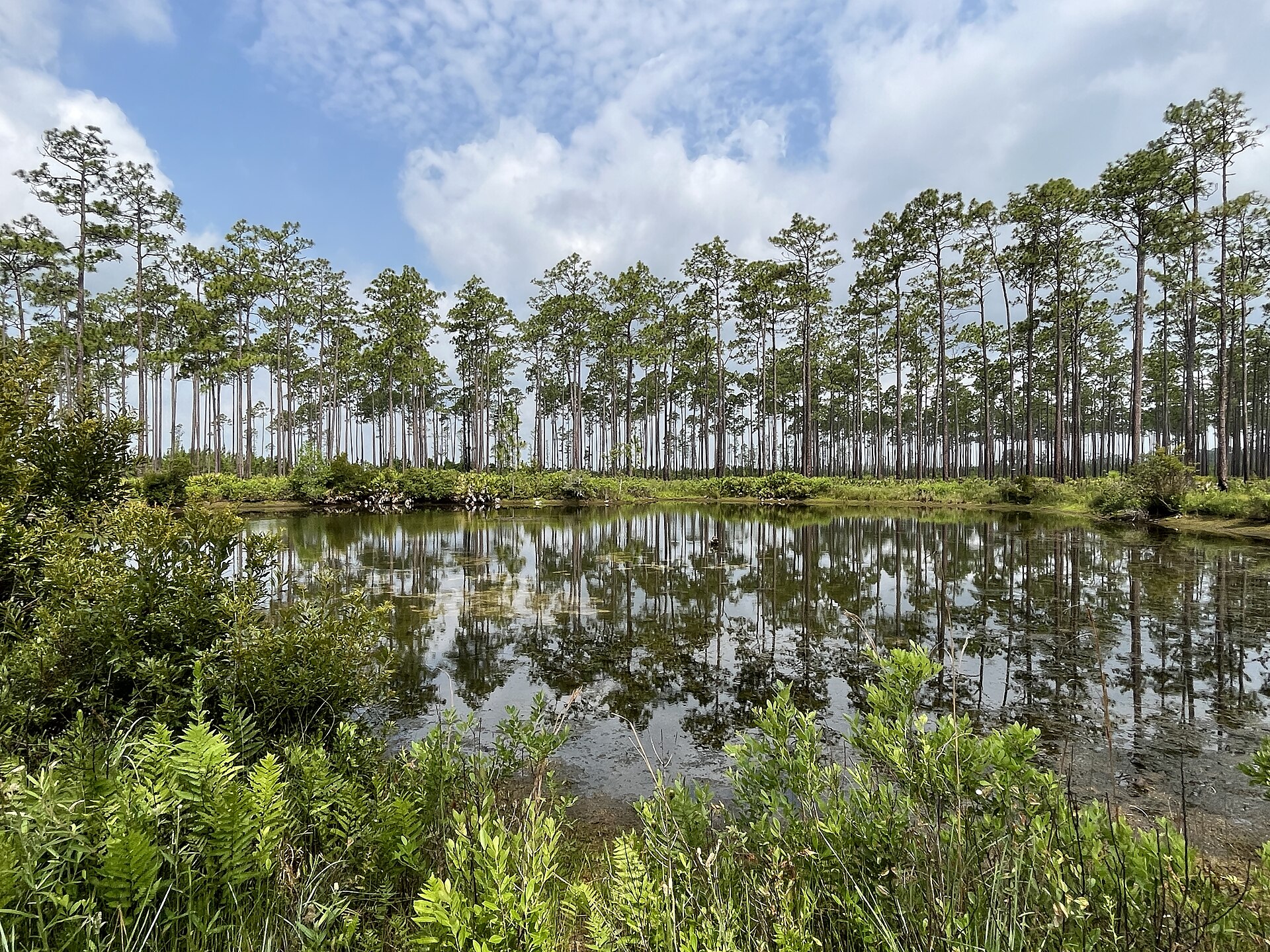
The famous places in Georgia, USA, fall into three groups: the historic streets of Savannah, the museums and parks of Atlanta, and a handful of natural landmarks such as the Okefenokee Swamp and Providence Canyon. If you are choosing where to spend limited time, it helps to decide first whether you want history, scenery or a mix of both.
This guide sorts the best-known stops by what they offer, so you can match them to the kind of trip you have in mind.
Which Georgia landmarks are worth planning a trip around?
A good rule is to build a trip around one or two anchors and treat the rest as detours. The state is large, and the best-known places sit far apart, so trying to see all of them in one visit mostly means time spent in the car.
The anchors people tend to choose fall into a few types:
- Cities with deep history: Atlanta and Savannah, which tell very different stories about the state.
- Protected natural areas: the Okefenokee Swamp and Providence Canyon State Park.
- Large landmarks you can see from a distance: Stone Mountain, a single mass of granite rising above the surrounding land.
- Roadside curiosities: a giant peanut near Plains and a granite monument that drew attention for decades.
If your interest leans toward quiet, wooded country, the natural areas will suit you best. If you want walkable streets and museums, start with the cities.
What makes Atlanta worth seeing?
Atlanta is the state capital and its most populous city. It sits in the foothills of the Appalachian Mountains at just over 1,000 feet (300 m) above sea level, and it is known for dense tree cover across the city. That surprises many visitors who expect only glass towers.
The city began as the end point of a state-backed railroad, and the rail connection explains much of its early growth. It later became an important organizing center of the American civil rights movement, with Martin Luther King Jr. among its leaders, a role documented in detail by the National Park Service through the Martin Luther King Jr. National Historical Park. That history is the reason many people visit.
Sites tied to civil rights history
The Martin Luther King Jr. Historic Site on Auburn Avenue is where the civil rights leader was born and is buried, and it includes his church, Ebenezer. It is a place to move slowly, read the displays and leave room in the day for reflection rather than rushing to the next stop.
Parks and public space
Centennial Olympic Park was built downtown after the city hosted the 1996 Summer Olympics. Its interactive fountains give some relief on hot summer days, and the park sits near other well-known downtown attractions, which makes it an easy stop between visits.
Atlanta also functions as a gateway. Its airport has been the world’s busiest by passenger traffic for most years since 1998, so many trips to the state begin or end here, and a day in the city can be folded into a longer journey toward the mountains.
Where should you go for history outside Atlanta?
The historic district is compact, no more than about a square mile, and you can walk to almost every one of its small parks. Forsyth Park is the best known and is a pleasant place for an unhurried stroll.
Along East River Street, weathered cobblestones and old port remnants now sit beside shops and bars. It is worth visiting both in daylight, when the details of the paving and buildings are easier to see, and again in the evening.
Stone Mountain Park lies roughly 30 miles east of Atlanta. It is a large granite mountain with a huge relief carving on one face, and it has long walking trails, lakes and an old mill on the grounds. In summer the park runs a laser show using the mountain as a backdrop.
If you are curious about the quirkier side of the state, the Georgia Guidestones, a granite monument with inscriptions in several languages, long attracted visitors, and the giant peanut near Plains is a short stop off Interstate 75. Treat these as brief detours, not reasons to plan a day.
What are the best natural places for a quieter trip?
For readers who prefer trees, water and trails, two places stand out.
The Okefenokee Swamp lies on the Georgia-Florida border and is the largest blackwater swamp on the continent. It supports abundant wildlife, and visitors can take guided boat tours, including at night to look for alligators. Canoeing and kayaking are also popular, and the visitor center explains the area’s history. Go with a guide if you are new to swamp travel, since the waterways can be confusing to navigate on your own.
Providence Canyon State Park is sometimes called the Little Grand Canyon. The canyon was partly shaped by human activity, the result of a farming error, yet the colors and shapes make it a rewarding place to walk. Several hiking trails run through the canyon and the surrounding area.
Practical habits for outdoor stops
- Carry more water than you expect to need, especially in summer.
- Wear shoes with grip, since canyon floors and swamp boardwalks can be slippery.
- Check current conditions and any closures with the managing park before you set out.
- Leave wildlife alone and keep a respectful distance.
Pairing a city stay with one natural stop gives a balanced trip without long stretches of driving, and it leaves time to enjoy each place rather than ticking it off a list.
Frequently asked questions
What is the best city to visit in Georgia, USA?
It depends on what you want. Atlanta suits you if civil rights history, museums and parks interest you, while Savannah suits a slower, walkable visit among small squares. Many travelers include both.
Is the Okefenokee Swamp worth visiting?
Yes, if you enjoy wildlife and quiet water. It is the largest blackwater swamp on the continent, and guided boat tours let you see alligators and other animals in their habitat.
How far is Stone Mountain from Atlanta?
Stone Mountain Park is roughly 30 miles east of Atlanta, so it works as a half-day or full-day trip from the city.
Can you hike in Georgia, USA, without going to the mountains?
You can. Providence Canyon State Park has several hiking trails through its canyon, and Stone Mountain Park has long walking paths around its grounds.
Related reading
- Foraging in the Appalachian Woods: What Is Safe and What Is Not
- Trees of the Cove: Learning the Woods Around You
Sources
- 16 Georgia Landmarks And Tourist Attractions Worth A Visit (aworldtotravel.com, accessed 2026-11-02)
- Atlanta — Wikipédia (en.wikipedia.org, accessed 2026-11-02)
Photo: Georgia – Okefenokee Swamp – 20220624111036, by Riis2602, CC BY-SA 4.0 (Wikimedia Commons)
