Walking Into the Woods With Your Eyes Open
Every autumn, someone stops at the trailhead below the cove with a basket and a phone full of screenshots, convinced that the woods are a grocery aisle waiting to be walked. The Appalachians are generous, and they are also indifferent. The same slope that offers a hedge of ripe blackberries also carries plants that will send a healthy adult to an emergency room, and a few that can kill without any dramatic warning. Foraging here is a wonderful, slow, humbling skill. It is not a weekend hobby you can pick up from a single article, and this one is no exception.
So read what follows as a map of the terrain and its hazards rather than a permission slip. Nothing here is an identification. No photograph, no description, and no app can positively identify a wild plant or fungus for you. Only sustained study, regional field guides, and time spent with experienced local foragers can do that — and even then, the honest answer is often I am not sure, so I am leaving it.
The One Rule That Never Bends
The rule is simple and absolute: you do not put anything in your mouth unless you are certain of what it is, and certainty comes from more than one independent source. Not confident. Not fairly sure. Certain, on the basis of multiple diagnostic features you have checked yourself, cross-referenced with a regional guide, and ideally confirmed by a person who knows the species well in the flesh.
The reason this rule is stated so bluntly is that the failure mode is silent. Many of the most dangerous plants and fungi in eastern North America taste fine. Some of them produce no symptoms at all for six to twelve hours, by which point the damage to the liver or kidneys is already underway. A pleasant meal is not evidence that you identified correctly. Neither is the fact that you felt fine last time.
- One feature is never enough. Color, shape, or general impression will match dozens of species. Certainty rests on a stack of characters: habitat, season, leaf arrangement, stem cross-section, smell, growth habit, and for fungi, spore color and attachment.
- Apps are a starting point, not an answer. Image recognition is genuinely useful for narrowing a search. It is also confidently wrong often enough that treating its output as an identification is dangerous.
- Old folk tests do not work. There is no reliable universal test — not peeling, not silver spoons, not whether animals eat it, not whether it tastes bitter. Several deadly species fail every one of these tests by looking and tasting harmless.
- When in doubt, leave it. This is the whole skill in four words. The woods will still be there next season, and so will you.
Learn the Woods Before You Learn the Plants
Experienced foragers do not wander looking for food. They read habitat. A north-facing slope with deep leaf litter, a wet seep below a rock ledge, an old logging road grown up in brambles, the edge where oak and hickory give way to hemlock — each of these supports a different community, and knowing which community you are standing in narrows the possibilities enormously before you ever look closely at a single plant.
Start by learning the trees. Around a cabin in the woods, the canopy tells you what grows underneath it. Then learn the calendar. Ramps and spring ephemerals belong to a few weeks in April; blackberries to July heat; hickory nuts and persimmons to the first frosts. A plant appearing far outside its window is a strong hint that you have the wrong plant.
Spend a Year Just Watching
A genuinely useful exercise is to pick five plants near the cabin and follow them through an entire year without harvesting anything. Watch them emerge, flower, fruit, and die back. You will learn more from that than from a stack of guides, because you will have seen every stage in its own habitat, at a scale no photograph captures.
The Confusions That Cause Real Harm
Certain pairings account for a large share of serious poisonings in this region. Knowing the pairs by name is not the same as being able to tell them apart, but it does tell you where the danger is concentrated.
The Carrot Family
Plants with lacy compound leaves and flat white flower clusters include some of the most poisonous species on the continent. Water hemlock and poison hemlock both grow in the East, and both have been mistaken for edible relatives with fatal results. This family is widely regarded as off limits for beginners, and many experienced foragers avoid it permanently. There is no casual version of this decision.
Berries and Vines
Wild grapes have a lookalike vine whose seeds are shaped differently and whose fruit is toxic. Pokeweed produces handsome purple berries on a red stem and is poisonous in every part, with a folk tradition of cooking the young shoots that involves multiple changes of water and still causes poisonings every year. Elderberry has a red-fruited relative, and even the common blue-black elderberry should not be eaten raw. Nightshades, moonseed, and various ornamental escapees add more traps.
Nuts and Fruits That Look Familiar
Buckeyes look like an obvious nut and are toxic. Unripe mayapple fruit is toxic while its leaves and roots are toxic at any stage. Even black walnut and hickory, which are genuinely good, require correct handling and can be confused by the inexperienced with things that are not.
Mushrooms Deserve Their Own Rulebook
Fungi are where the margin for error narrows to nothing. Eastern woods hold species in the Amanita group that contain amatoxins — compounds that are not destroyed by cooking, drying, or freezing, that cause no symptoms for many hours, and that can destroy a liver. They have been mistaken for edible species by people who were sure of themselves.
- Deadly species are not exotic here. Destroying angels and their relatives are common in Appalachian oak woods in summer and fall. They are white, plain, and unremarkable. Nothing about them looks threatening.
- Delayed onset is the hallmark. The most dangerous mushroom poisonings often begin six to twenty-four hours after the meal, which is why a person may not connect the illness to the food and may wait too long to seek care.
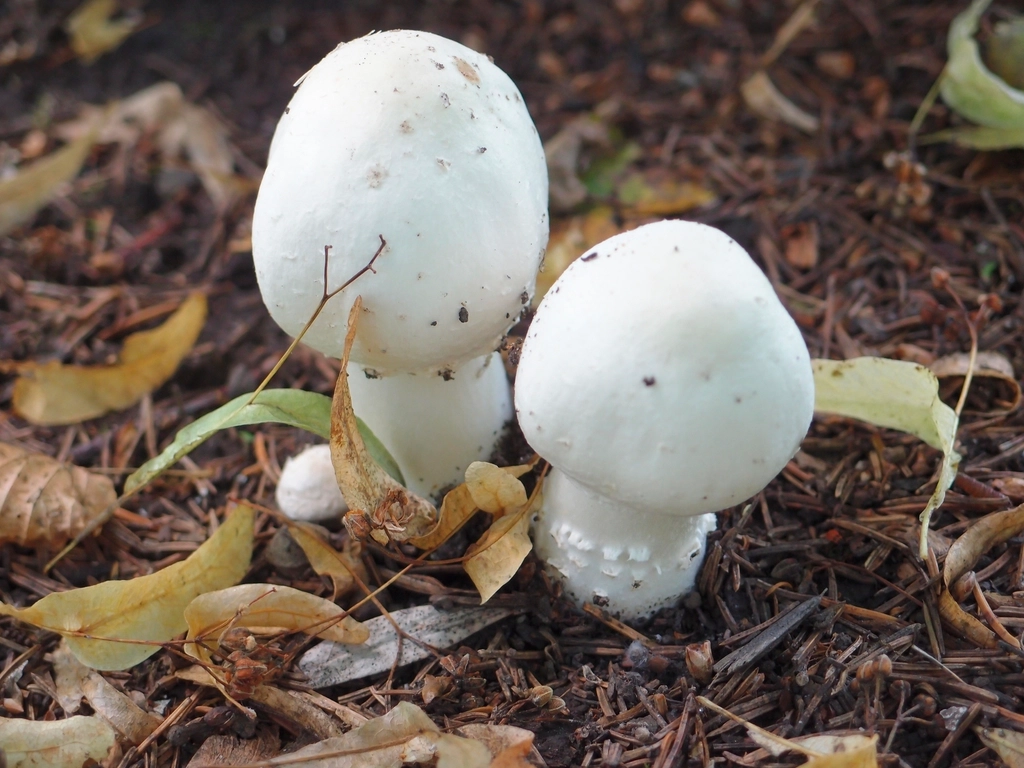
- Lookalikes exist for nearly every popular edible. False morels shadow true morels; small brown deadly species grow on wood alongside honey mushrooms; young toxic species emerge from an egg-like stage that resembles a puffball until you slice it.
- Spore prints and cross-sections are basic technique. If you are not routinely taking spore prints and slicing specimens lengthwise to examine the base, you are not yet identifying mushrooms — you are guessing at them.
- A local club is the real shortcut. Regional mycological societies run forays where people who know the species will look at what you found, in person. Nothing online substitutes for this.
Harvesting Without Emptying the Cove
The second half of foraging ethics is not about your safety but about whether the plant is still there in five years. Ramps are the cautionary tale of the Appalachians: a slow-growing woodland plant that takes years to reach harvestable size and that commercial digging has stripped from whole hillsides. Ginseng is under formal protection for the same reason, with a regulated season and legal restrictions.
- Know whose land you are on. National forests, state parks, private timber land, and your own acreage all have different rules. Some ban collection entirely; some allow personal-use gathering of specific things; some require a permit. Check before, not after.
- Take a fraction, not a share. A common guideline is to leave the great majority of what you find, and to skip small or struggling patches altogether. Leaves and fruit are less costly to a plant than roots and bulbs.
- Avoid roadsides and old homesites. Runoff, road salt, herbicide spraying, and legacy contamination from lead paint or orchard sprays all concentrate in ways you cannot see.
- Move around. Returning to the same patch every year is how patches disappear. Spread the pressure across the ridge.
Handling What You Bring Home
Even correctly identified wild food deserves a cautious kitchen. Many perfectly good wild edibles are toxic or badly irritating when raw, and individual people react to things that most others tolerate. The standard advice among careful foragers is to introduce one new species at a time, thoroughly cooked, in a small portion, with no other new foods in the same meal — so that if something goes wrong you know exactly what caused it.
Keep a labeled sample of anything you eat, in the refrigerator, for a day or two. If someone becomes ill, that sample is the single most useful thing a physician or poison center can have. Wash everything, expect grit and insects, and remember that wild food spoils faster than the version bred for shelf life.
If Something Goes Wrong
Symptoms after eating anything wild — nausea, vomiting, sweating, confusion, cramping, or simply a bad feeling that you cannot explain — are a reason to call a poison control center immediately, not to wait and see. In the United States, poison control is reachable around the clock by phone, and calling is free. Bring or describe the leftover material, note the time of the meal, and say plainly that it was foraged.
At a cabin, add one practical wrinkle: know your cell coverage and your drive time to the nearest hospital before you need them. A twenty-minute gravel descent in the dark is a different problem than a suburban ambulance call, and that alone is a good argument for being more conservative in the woods than you would be in town.
The Slow Version of This Hobby
The people who forage well around here tend to have narrow, deep lists. They know six species cold, in every season, across every stage of growth, and they ignore everything else. That is not a lack of ambition; it is what competence looks like. A basket of one confidently known plant beats a basket of five hopeful ones, every time.
So start with a notebook rather than a basket. Record dates, slopes, elevations, what was flowering nearby, what the soil felt like. Photograph the whole plant, the underside of the leaves, the base of the stem. Go on a guided walk with a regional group. Buy two or three field guides written specifically for the southern and central Appalachians rather than a general North American volume. Then, after a season or two, pick one species and learn it until you would recognize it in the dark.
The woods around the cove reward that kind of patience. They are not going anywhere, and the best part of foraging was never the eating anyway — it was the way it makes you look at a hillside you thought you already knew.