The Season Nobody Puts on a Postcard
There is a stretch here, roughly from the middle of February into April, that has no good name and no marketing. The snow is mostly done. The leaves have not started. The ground is soft, the creek is loud, and the mountains show every bone they have. Locals call it mud season, or just the quiet months, and a certain kind of guest waits all year for it.
If you come expecting a shoulder-season version of summer, you will be disappointed. If you come for what the season actually offers, it is one of the best times to be up here.
What Mud Season Actually Is
The mud is not simply rain. It comes from the freeze-thaw cycle that runs through late winter at these elevations. Water in the soil freezes overnight, expands, and lifts the ground surface. During the day it thaws from the top down, but the ground underneath is still frozen, so the meltwater has nowhere to drain. What you get is a saturated layer sitting on a frozen one: soup on a plate.
That is why a trail or a gravel drive can be firm at eight in the morning, greasy by noon, and firm again after dark. It is also why frost heave lifts rocks out of a road, pops nails in an old porch, and leaves the ground looking like it has been stirred.
Elevation stretches the whole thing out. Spring works its way uphill over weeks, so the valley below can be green and blooming while the ridge above the cabin is still bare and frozen at dawn. In practice, a single day here can hand you three seasons depending on how far you drive.
Why Some People Prefer It
You get the place to yourself
Trailheads that hold forty cars in October hold two. Overlooks are empty. You can stand at a waterfall on a Saturday and hear only the water. For anyone who has fought for parking in leaf season, that alone is worth the mud.
The views come back
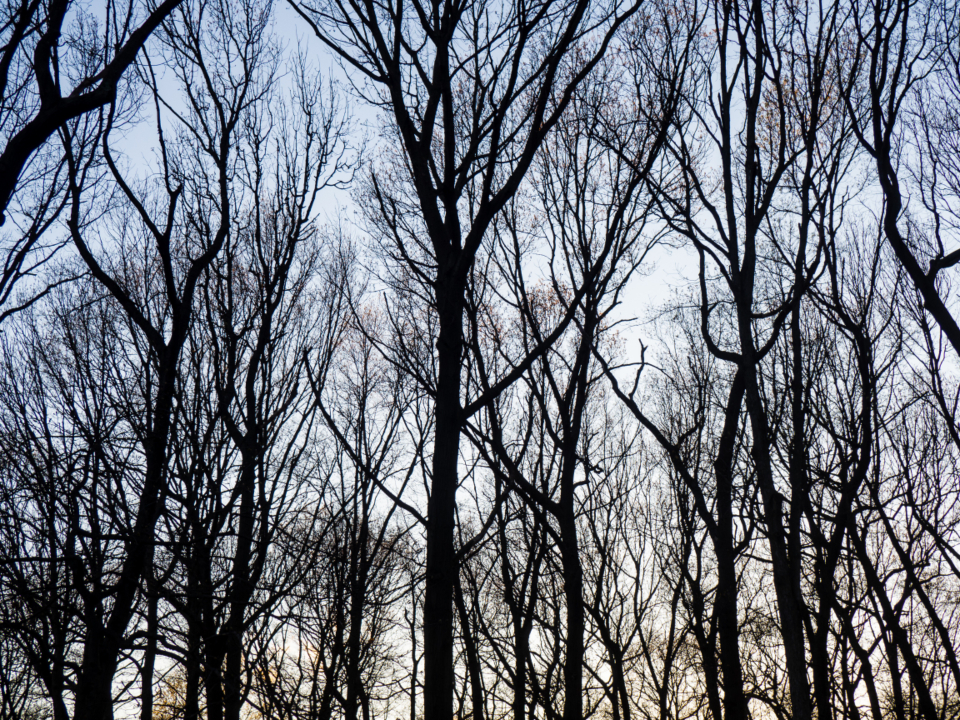
With the canopy down you can see through the woods for hundreds of yards, and the long views from ridges open up in every direction. Ridgelines that vanish behind green from May to October are visible again as the actual shape of the land. Photographers who care about structure rather than color often prefer these weeks outright.
The water is at its best
Snowmelt and late-winter rain put the creeks and waterfalls at their fullest. A falls that trickles in August roars in March. This is also when the woods sound loudest, because water is moving everywhere, down every draw and seep.
What Is Closed and What Is Open
This is the practical tradeoff, and it is worth checking specifics rather than assuming.
- High roads may be gated. Sections of the Blue Ridge Parkway and other high-elevation roads close for winter conditions and reopen on no fixed schedule. Check the managing agency’s current road status the morning you travel, not the week before.
- Some campgrounds and facilities run seasonal hours. Park campgrounds, picnic areas, visitor centers and restrooms often operate on reduced schedules outside the main season, and opening dates shift year to year.
- Small-town businesses thin out. Restaurants and shops in mountain towns commonly cut hours or close midweek in late winter. Call ahead rather than driving down for dinner on a hunch.
- Lower trails are usually fine. Valley and gorge trails, gravel forest roads and river greenways generally stay open and drain better than high ridge trails.
- Cabins, creeks and woods are wide open. Nothing about the land itself is closed. The porch works, the wood stove works, and the trout are still in the creek under whatever the state season allows.
Soft Trails and Why It Matters
Here is the one thing we ask guests to take seriously in these weeks. Saturated soil has almost no structural strength. A boot pressing into it does not compress the tread and spring back; it shears the soil apart and squeezes the air out. Do that a few hundred times and the trail becomes a trench that collects water, which erodes it further, which sends sediment into the creek. A trail damaged in three muddy weeks can take a volunteer crew a season to repair.
Walk through, not around
The instinct when you meet a mud hole is to step off onto the dry edge. That is exactly the wrong move. Skirting a puddle widens the trail a little each time, kills the vegetation holding the bank, and turns a two-foot tread into a ten-foot scar. Waterproof boots and gaiters exist precisely so you can walk straight through the middle and keep the damage in one narrow line.
Choose the right trail for the day
South-facing slopes dry first. Trails on rock, gravel or old roadbeds hold up far better than dirt singletrack. Lower elevations thaw earlier than high ones. If you sink past your boot sole, or if you are leaving prints deeper than an inch in soft tread, the honest answer is that the trail is not ready and you should go somewhere else. Some land managers post seasonal closures or mud advisories for exactly this reason, so check before you drive to a trailhead.
The Woods Without Leaves
Bare woods are not empty woods. They are legible in a way that closed-canopy summer forest never is.
You can see the land itself: the terraces, the old stone walls, the sunken roadbeds and rock piles left by people who farmed these slopes a century ago. You can see the shape of individual trees, which is how you learn to tell them apart in winter, and you can see the nests, the woodpecker holes and the bear-clawed bark that the leaves hide the rest of the year.
The first things to come back
Spring ephemerals get their whole year done before the canopy closes over them. Bloodroot, hepatica, spring beauty and trout lily push up through leaf litter while the woods still look dead, take their light, flower, set seed, and go dormant. Serviceberry, which old-timers call sarvis, throws white flowers on the slopes before almost anything else leafs out. Red maple flowers give bare ridges a faint reddish cast if you look at the right angle.
The soundtrack changes too. Spring peepers start calling from wet spots on the first warm evenings, sometimes with snow still in the shade. Woodcock display at dusk in open bottoms. Resident birds shift from contact calls to real song weeks before the migrants arrive.
Practicalities of a Quiet-Month Stay
Dress for three days of weather in one afternoon. Layers, a hard shell, and a hat you can put on when the wind finds the ridge. Bring boots you are willing to ruin, plus a second pair, because wet leather does not dry overnight. A brush and a bucket by the door saves the floors and our tempers.
Assume the drive may be slick even without snow, since clay on a grade is greasy when it thaws. Plan meals around the cabin rather than around town hours. Expect the wood stove to matter more than it does in October, because a raw damp forty-degree day feels colder than a dry twenty-degree one. And start checking for ticks again as soon as the days warm; they get moving well before most people expect.
The Turn
What makes these weeks worth it is that you can watch the year change. In October the show is finished and handed to you. In March it happens in front of you, a little at a time, over a few days: peepers one evening, sarvis blooming on the far slope, a green haze on the low ground that was not there when you arrived. You notice it because there is nothing else competing for your attention, which is more or less the whole argument for coming up here in the quiet months.