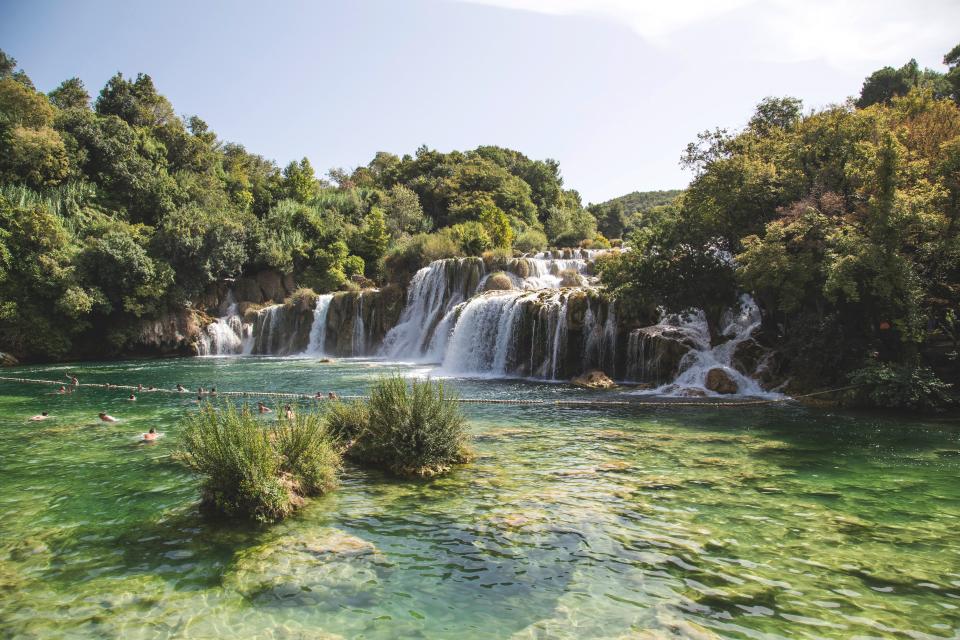
The Falls Are the Reason Half of You Came
Almost every guest asks about waterfalls before they ask about anything else. That is fair. These mountains have hundreds of them, from roadside cascades to hundred-foot drops at the head of a cove, and a cold green plunge pool on a hot August afternoon is one of the genuine pleasures of the southern Appalachians.
It is also the setting for most of the serious accidents that happen to visitors here. Search and rescue teams in western North Carolina and east Tennessee run waterfall calls every season, and a meaningful number of them end badly. The people involved are rarely reckless; they are ordinary visitors who did not know that the ground they stood on was not ordinary ground.
Why These Falls Are More Dangerous Than They Look
The Rock Is Slicker Than Any Rock You Have Walked On
Continuously wet rock in a shaded gorge grows a film of algae, diatoms and bacteria. It is often invisible. It does not look green, it does not look wet in any special way, and it will take your feet out from under you without warning. Dry gneiss and granite in this region give beautiful grip, which is precisely the trap: you walk out on dry rock, feel confident, take one more step onto the darker band near the water, and you are gone.
Add the spray zone, where rock stays damp far back from the flow, and mist-slick leaves in fall. Nobody stops once they start sliding on it, and the slide goes where the water goes.
The Top Is the Killer, Not the Bottom
The most common fatal pattern at Appalachian waterfalls is a fall from the top or from the rim beside it, usually while someone is walking to the edge for a photograph, crossing above the lip, or scrambling on a wet side ledge. Bystanders often say the person was standing still. They were, right up until the film under one shoe let go.
Treat the crest, both banks and every ledge above the drop as off limits. No photograph is worth it, and no version of that fall ends in a swim.
What the Water Is Doing at the Base
Recirculation and Undertow
Falling water drives down into the plunge pool and then rolls back upstream along the surface toward the falls. Swimmers describe it as being held. Even a modest cascade can generate enough recirculation that a strong adult cannot swim out of the pocket directly under the flow, and the aerated white water there carries far less buoyancy than clear water, so you float lower than you expect. If you are caught, swim to one side and out of the current rather than straight away from the falls. The reliable move is not to get under the chute at all.
Strainers and What You Cannot See
Plunge pools collect things. Storm-jammed logs and root wads form strainers that water passes through and a body does not. Old logging-era cable, rebar, sheet metal and broken concrete turn up in creeks all through this region. Depth changes year to year as floods move gravel; the pool that was eight feet deep last summer may be four feet deep now with a boulder in the landing zone. That is the whole case against jumping or diving anywhere you have not carefully waded and felt out first, on that same day.
Cold Water in July
Mountain creeks here run cold even in the middle of summer, especially in shaded gorges and below springs, and the pool under a falls is fed by moving water that never sits still long enough to warm. Sudden immersion in cold water triggers an involuntary gasp and a burst of rapid breathing. If your head goes under during that first gasp, you can inhale water while fully conscious and a good swimmer.
Cold also erodes swimming ability quickly. Hands stop gripping, then arms stop pulling, and it happens sooner than people believe. Get in gradually, stay near the edge until your breathing settles, and cut the swim short if anyone starts shivering hard or gets clumsy or quiet. Bring dry clothes even on a hot day; the walk out of a shaded gorge in wet cotton is colder than the swim.
The Creek Can Rise While You Are Standing In It
Southern Appalachian drainages are steep and narrow, and a great deal of rain lands on a small area of hard-to-absorb slope. A storm sitting over the headwaters several miles above you, out of sight and out of earshot, can push a surge down the creek while you are standing in sunshine at the swimming hole.
The warning signs are worth memorizing. The creek changes pitch and gets louder. The water clouds up, going from clear to tea-colored to brown. Sticks, leaf mats and foam start coming through. The water at your ankles feels pushier than it did. Any one of those means get out, get to the bank, and get uphill away from the channel, not downstream toward the car. Do not try to recross a creek that has come up. Wait it out. Most of these surges drop again within hours.
Choosing a Swimming Hole That Is Actually a Swimming Hole
The good ones share a shape: a wide, slow pool with a gravel or sand bar entry, well below the falls rather than beneath it, with an obvious exit on the downstream side and no downed timber in the current. A pool with a clean walk-in and walk-out is a different proposition from a slot of green water at the foot of a chute.
There are also managed sites in the region, including a well-known natural waterslide on national forest land that has staffing in season, and those are a reasonable choice with kids. Hours, staffing and fees change from year to year, so check the current information with the managing agency before you drive out.
Rules, Closures and Getting Help
Regulations vary by land manager and by individual falls. Some waterfalls in national parks, national forests, state parks and municipal watersheds prohibit swimming, wading or climbing entirely; some are seasonally closed; some are on private land where you have no right to be. Signs at the trailhead are the current rule, and they change. Read them, and check the managing agency’s site before you go rather than an old blog post.
Understand what a rescue looks like here as well. Cell coverage in gorges is poor to nonexistent. An injured person at the base of a falls may need a technical rope evacuation and a long carry, and that takes hours, not minutes. Tell someone at the cabin where you are going and when you expect to be back, and go with at least one other adult.
The Short List We Give Every Guest
- Stay behind the railings and off the top. Where a land manager has built a fence or an overlook, that is where the falls has already hurt people. The viewing platform is not the timid option; it is the informed one.
- Wear real footwear in the water. Sticky-rubber water shoes or old sneakers with laces. Flip-flops come off in current and bare feet find broken glass and rebar.
- Never jump into water you have not stood in. Wade it, feel the bottom with your feet, check the depth and the landing area every single visit, because floods rearrange pools.
- Watch children constantly and put them in life jackets. Current at a plunge pool moves a small body faster than an adult can react from twenty feet away.
- Leave the alcohol at the cabin. Slick rock, cold water and drinking are the combination that shows up over and over in the incident reports.
- Do not drink the creek, and rinse off after. Mountain water carries giardia and bacterial loads that spike after rain, and swallowing pool water is how people get sick a week into a trip.
- Turn around when the weather turns. Afternoon thunderstorms build fast here, and an exposed wet gorge is a poor place to be. Leave earlier than feels necessary.
None of this argues against going. Go often. Just go assuming that the rock is slick, the pool is colder and more complicated than it looks, and the creek can change its mind in twenty minutes.
Read next: Famous Places in Georgia, USA: Where the Mountains, Swamp and History Meet